
What Is an AI Image Generator? (2026 Guide) – Features, Uses & Benefits
An AI Image Generator is a modern tool that creates images from written text prompts using artificial intelligence. Users simply describe a scene, style, object, or concept, and the system generates a visual based on that input. This makes image creation faster, easier, and more accessible for beginners, creators, marketers, and businesses.
AI Image Generator Online Free (2026)
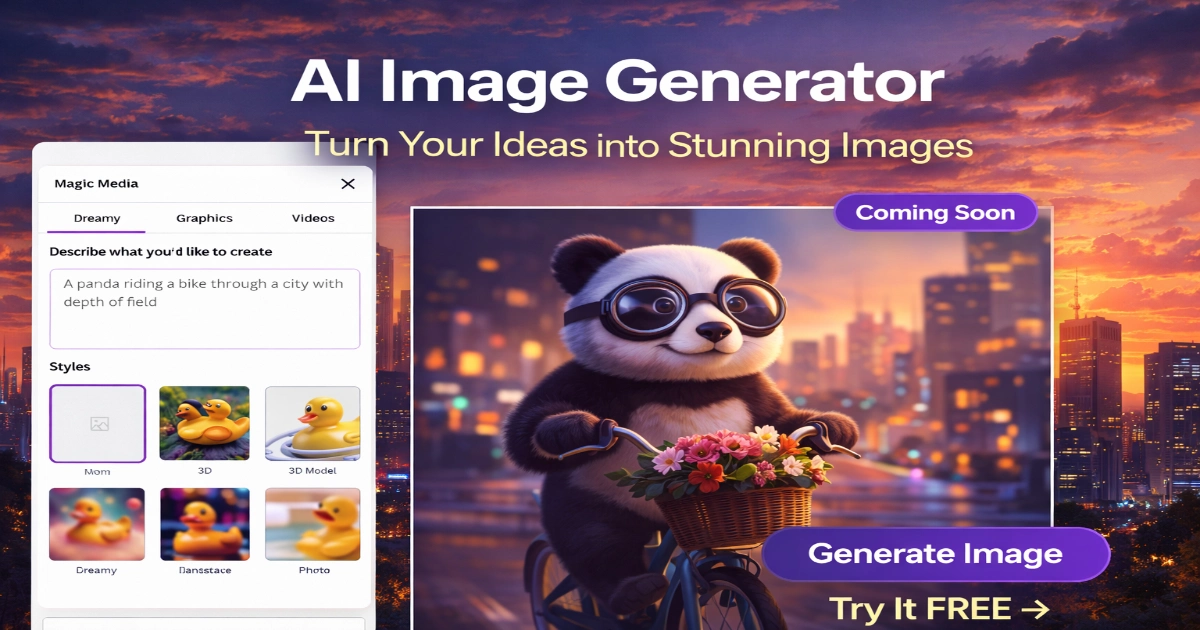
Create images from text prompts with AI. This tool page is currently in development and provided for educational and informational purposes.
AI Image Generator Tool
Enter a text prompt, choose a style, and generate AI-powered images in future updates.
Future feature: create high-quality AI images from text prompts.
Future feature: choose styles such as realistic, illustration, and creative artwork.
Future feature: export AI-generated images in PNG, JPG, and WebP formats.
What Is an AI Image Generator?
An AI image generator is a tool that creates images from written text prompts using artificial intelligence. Users can describe a scene, style, object, or concept, and the AI model turns that description into a visual result.
How It Works
- Enter a text prompt describing the image you want
- Select style, format, or output preferences
- Generate an AI-created image based on your prompt
Key Benefits
- Create images from text without design software
- Generate visuals for blogs, social media, and thumbnails
- Save time on creative ideation and mockup creation
- Explore multiple visual concepts quickly
Popular Use Cases
- YouTube thumbnails
- Blog featured images
- Social media content
- Concept art and design inspiration
- Product mockups and marketing visuals
Today, AI image generation is used for concept art, social media graphics, product mockups, blog visuals, creative inspiration, and many other digital projects. Instead of needing advanced design experience, users can turn ideas into visuals within seconds.
This educational guide explains how AI image generators work, their main features, potential benefits, and common real-world use cases in 2026.
Policy Declaration
This page is provided for educational and informational purposes only. It explains how AI Image Generator technology works, including general features, benefits, and practical applications. The tool displayed on this page is currently under development and may not yet be fully functional. This content is intended to help users understand the concept of AI-powered image generation and does not make misleading claims regarding functionality or results.
AI Image Generator Online (2026 Guide): How It Works, Benefits, and Use Cases
Artificial intelligence has transformed many areas of digital creation, and one of the most popular innovations is the AI Image Generator. This technology allows users to create original visuals by entering simple text prompts, removing many of the barriers associated with traditional graphic design software.
For example, a user can type a prompt such as “modern office workspace with laptop and natural light” or “fantasy castle in the mountains at sunset,” and the AI system attempts to generate an image based on that description.
This process can save time, support creativity, and help users quickly explore ideas without requiring advanced editing skills. It has become increasingly useful for content creators, bloggers, designers, educators, ecommerce sellers, and social media managers.
In this guide, you’ll learn how an AI Image Generator works, what benefits it may offer, and where it can be used effectively. The goal of this page is to provide clear, helpful, and user-focused educational information about this growing technology in 2026.
What Is an AI Image Generator?
An AI Image Generator is a technology that transforms written text into visual images using artificial intelligence. This process is commonly known as text-to-image generation. Instead of designing graphics manually, users can describe an idea in words, and the system attempts to create a matching image automatically.
For example, if a user enters a prompt such as:
“a modern city skyline at sunset with soft lighting”
the AI model analyzes the description and generates a visual based on the requested scene, style, mood, and details.
AI image generation tools are trained on large collections of image and text data. Through advanced machine learning, these systems learn patterns such as shapes, colors, textures, lighting, composition, and relationships between words and visuals. This allows them to interpret prompts and create new image outputs.
Today, AI Image Generator technology is commonly used for creative projects, concept ideas, marketing visuals, educational graphics, and social media content.
How AI Image Generators Work
While the user experience often feels simple, the technology behind an AI Image Generator is highly advanced. In most cases, users only type a prompt and click generate, but several processes happen behind the scenes to create the final result.
Basic Process
- The user enters a text prompt describing the desired image.
- The AI system interprets the words, objects, style, and scene details.
- Visual patterns are selected based on learned training data.
- The model builds and refines the image step by step.
- The completed image is shown to the user.
Many modern platforms use diffusion models and neural networks. These systems begin with random noise or rough visual patterns, then gradually improve the image through multiple stages until clearer shapes, textures, and details appear.
This approach helps AI Image Generator tools produce realistic, artistic, or stylized results depending on the prompt and model capabilities.
Key Features of AI Image Generators
Modern AI Image Generator tools often include a range of features designed to make image creation faster, easier, and more flexible for different users. While features may vary between platforms, many systems commonly offer the following capabilities:
Common Features
- Text-to-image generation – Create visuals from written prompts or ideas.
- Multiple artistic styles – Generate images in realistic, illustration, cartoon, fantasy, abstract, or cinematic styles.
- Custom output sizes – Choose different image dimensions for websites, social media, presentations, or print use.
- High-resolution image generation – Produce clearer images suitable for digital projects and creative work.
- Fast processing speeds – Generate visuals within seconds on many modern platforms.
- Prompt refinement options – Adjust wording to explore new variations and improve results.
- Creative experimentation – Test multiple concepts quickly without traditional manual design steps.
These features make AI Image Generator tools useful for creators, marketers, bloggers, designers, educators, and anyone who wants to turn ideas into visuals with less effort.
Helpful Workflow Tip
Large generated images can sometimes create slower page speeds or larger file sizes. For better website performance, faster sharing, or optimized storage, it can be helpful to compress image online after generating high-resolution files. This can reduce file size while maintaining good visual quality.
Supported Image Formats
Most modern AI Image Generator tools provide output in widely used image formats so users can choose the best option for their project. The right format often depends on where the image will be used, whether for websites, design work, presentations, or social media.
Common Output Formats
- PNG – Ideal for high-quality graphics, sharp details, and images that need transparent backgrounds. Often preferred for design work, logos, and layered editing.
- JPG – Popular for everyday use because it offers smaller file sizes. Commonly used for blog images, email sharing, and standard web content.
- WebP – A modern format designed for faster web performance with efficient compression. Often useful for websites that want better loading speeds while maintaining strong image quality.
Which Format Should You Choose?
The best choice depends on your goal:
- Use PNG for transparency or editing flexibility.
- Use JPG for smaller files and general use.
- Use WebP for website speed and modern browser support.
Choosing the correct format can improve image quality, storage efficiency, and loading performance across different platforms.
Helpful Workflow Tip
If you need to switch between PNG, JPG, or WebP formats after using an AI Image Generator, our image converter can help prepare files for websites, social media, ecommerce listings, and other digital uses.
How to Use an AI Image Generator
While features may differ between platforms, the basic workflow of an AI Image Generator is usually simple and beginner-friendly. Most tools are designed so users can create visuals in just a few steps.
General Process
- Enter a text prompt describing the image you want to create.
Example: modern office desk setup with laptop and natural lighting - Choose optional settings such as image style, aspect ratio, quality level, or output size.
- Generate the image and allow the system a few moments to process the request.
- Review the result and make prompt changes if you want different variations.
- Download the final image in your preferred format such as PNG, JPG, or WebP.
This streamlined process helps make AI Image Generator tools accessible to beginners, creators, businesses, and users with no previous design experience.
Benefits of Using AI Image Generators
Modern AI Image Generator tools offer several practical advantages for users who need visuals quickly and efficiently.
Accessibility
Users can create images without advanced design skills or professional editing experience.
Time Efficiency
Images can often be generated in seconds, reducing the time normally required for manual design work.
Creative Flexibility
Users can test multiple ideas quickly by adjusting prompts, styles, colors, or scene descriptions.
Cost Efficiency
Many platforms provide free or low-cost options, helping users create visuals without expensive software subscriptions.
Productivity Support
Content creators, marketers, bloggers, and ecommerce sellers can generate visuals faster for regular publishing needs.
Common Use Cases
An AI Image Generator can be useful across many industries and creative workflows. Common examples include:
- Blog and website images
- YouTube thumbnails
- Social media posts and graphics
- Marketing visuals and advertisements
- Product concept mockups
- Educational graphics and presentations
- Concept art and creative projects
- Branding inspiration and design ideas
These tools are especially valuable for content creators and businesses that need fresh visuals on a regular basis.
Limitations of AI Image Generators
While an AI Image Generator can be fast and useful, it is important to understand that results may not always be perfect. Output quality often depends on the prompt, model capabilities, and the complexity of the requested image.
Common Limitations
- Prompt quality matters – Clearer prompts usually produce better results, while vague prompts may create inconsistent outputs.
- Complex scenes can be challenging – Crowded environments or detailed multi-object scenes may generate unexpected elements.
- Text inside images may be inaccurate – Many tools still struggle with readable signs, labels, or embedded text.
- Fine details may need refinement – Hands, faces, fingers, reflections, and symmetry can sometimes appear imperfect.
- Style consistency may vary – Repeating the exact same character or scene across multiple generations can be difficult on some platforms.
For professional, client, or commercial projects, it is a good practice to carefully review generated visuals and make manual edits where needed.
Best Practice Tip
Use an AI Image Generator for initial ideas, drafts, or quick visuals, then refine the final image with editing tools if higher precision is required.
AI Image Generators and Traditional Design Tools
AI-powered tools and traditional design software each serve different purposes. They are not always competitors—in many cases, they work best together.
AI Image Generators Are Useful For:
- Rapid image creation
- Idea exploration
- Fast concept drafts
- Creative experimentation
- Content production at scale
Traditional Design Tools Are Better For:
- Precise editing and retouching
- Layer-based workflows
- Branding consistency
- Advanced typography
- Detailed manual control
Best Combined Workflow
Many creators start with an AI Image Generator to quickly build concepts, then move to traditional editing software for polishing, resizing, branding, or final adjustments.
Helpful Editing Tip
If you already have an image and only need to isolate the subject or remove the background, you can use our background remover for quick and simple background editing.
Image Optimization and Performance Considerations
When using visuals created with an AI Image Generator for websites, blogs, ecommerce stores, or landing pages, image optimization is an important final step. Large or unoptimized files can slow page loading times, affect mobile usability, and reduce overall user experience.
Optimizing generated images helps ensure they look professional while remaining efficient for online use.
Why Image Optimization Matters
- Faster website loading speeds
- Better mobile browsing experience
- Lower bandwidth usage
- Improved page performance
- Cleaner sharing across platforms
- More efficient storage management
Key Optimization Tips
Choose the Right File Format
Select PNG, JPG, or WebP based on quality needs, transparency requirements, and website speed goals.
Reduce File Size
Large images can often be compressed without major visible quality loss, helping pages load faster.
Use Proper Dimensions
Uploading oversized images can waste bandwidth and slow performance. Resize visuals to match the space where they will be displayed.
Keep Visual Quality Balanced
Aim for a balance between sharp appearance and practical file size.
Search Performance Considerations
Optimized visuals can contribute to better page experience signals, smoother navigation, and stronger technical SEO foundations when used correctly.
Helpful Workflow Tip
After creating an image with an AI Image Generator, you can adjust dimensions easily with our image resizer tool for better compatibility across websites, blogs, ecommerce stores, and social media platforms.
Privacy and Responsible Use
When using an AI Image Generator, privacy awareness and responsible use are important. Like any online creative tool, users should think carefully about the content they upload, generate, or share.
Recommended Best Practices
- Avoid uploading sensitive or private material such as personal documents, confidential business files, or private photographs unless you fully trust the platform.
- Use generated images responsibly and ensure visuals are appropriate for your intended audience or platform.
- Review platform terms and guidelines when using third-party tools, especially for commercial or public use.
- Check usage rights when necessary if images will be used for branding, products, or client work.
- Protect personal information by avoiding prompts that include private data.
Understanding how data is collected, processed, or stored is an important part of using any online AI Image Generator service.
Practical Reminder
Before using any platform, it is wise to review its privacy policy, account settings, and content usage terms.
Future of AI Image Generation
The future of the AI Image Generator industry is developing quickly. As models improve, users can expect more advanced creative options, faster workflows, and broader integration across digital platforms.
Likely Future Developments
- More realistic image quality with stronger lighting, textures, and fine detail.
- Faster generation speeds for quicker content production.
- Better control over style and composition through advanced prompt tools and editing options.
- Improved consistency for repeated characters, branding assets, or design themes.
- Integration with video and animation tools for motion content creation.
- Smarter editing workflows that combine generation, background removal, resizing, and enhancement in one process.
As this technology continues to mature, AI Image Generator tools are expected to become even more common in marketing, ecommerce, design, education, entertainment, and everyday content creation workflows.
Conclusion
An AI Image Generator offers a practical and accessible way to turn written ideas into visual content. By converting text prompts into images, these tools help simplify the creative process and make image creation available to a wider range of users, including beginners, creators, marketers, educators, and businesses.
While AI tools are not a complete replacement for professional design software, they can be highly useful for everyday tasks such as concept creation, social media graphics, blog visuals, quick mockups, and creative experimentation.
As the technology continues to improve, the AI Image Generator is becoming an increasingly valuable part of modern digital workflows.
This page is intended to provide a clear, structured, and educational overview of AI image generation so users can better understand how the technology works, its benefits, limitations, and where it may be applied effectively.
Explore More Tools
To discover additional utilities for generating, editing, resizing, converting, compressing, and optimizing images, you can explore all image tools available on PixelCraftTools.
Educational Note
This content is provided for informational and educational purposes only. The AI Image Generator tool referenced on this page is currently under development and may not yet offer full live functionality.
Users should carefully review, test, and verify any generated outputs before using them in professional, public, or commercial environments.
Transparency & Educational Intent
This page is designed to provide clear, user-focused information about AI Image Generator technology. It explains how text-to-image systems generally work, their common capabilities, practical limitations, and typical use cases in modern digital workflows.
No claims are made regarding guaranteed outcomes, exact performance levels, or commercial success. The purpose of this content is to help users understand the concept of AI-generated images in a balanced and informative way.
Google Policy Awareness
This content is written with a focus on helpful, people-first information and general search quality best practices. It does not promote misleading functionality, deceptive experiences, or unsupported promises.
The page is intended to educate users in a clear and responsible manner. Users who publish websites are encouraged to review official resources such as Google Search Essentials and related guidance on Creating Helpful Content.
Recommended References:
Copyright & Content Responsibility
Users are responsible for ensuring that any images they create, upload, download, or modify comply with applicable copyright laws, licensing terms, and platform policies.
AI-generated visuals may sometimes resemble existing styles, themes, or learned patterns. For that reason, users should review originality, licensing suitability, and intended use before using outputs commercially or publicly.
For official copyright guidance, users should consult trusted legal or governmental resources relevant to their region.
Recommended References:
AdSense & Content Compliance Notice
This page is structured to align with general quality expectations for informational websites. It avoids misleading claims, exaggerated promises, harmful content categories, and deceptive monetization practices.
All information is presented in a neutral, educational, and user-focused tone intended to support a trustworthy content experience.
Recommended References:
Tool Availability Disclaimer
The AI Image Generator tool shown on this page is currently under development. Any interface, preview, or layout presented is for demonstration and educational purposes only.
Users should not expect guaranteed real-time image generation functionality at this stage. Features may be added, changed, or improved in future updates depending on development progress.
Privacy & Data Handling
This page does not intentionally collect or store user-generated image content through the informational content itself.
If future AI tool features are introduced, data handling practices, privacy details, and processing policies should be clearly explained to users.
As a general best practice, users should avoid submitting sensitive, private, or confidential information into any online tool unless they fully trust the platform.
Responsible Usage Guidance
Content created with an AI Image Generator should be used responsibly and ethically.
Users should avoid generating misleading, harmful, deceptive, or unauthorized content. It is strongly recommended to review all outputs before publishing, especially for educational, professional, brand, or commercial use.
Responsible use helps maintain trust, quality, and safe digital publishing standards.
Frequently Asked Questions (FAQ)
What is an AI image generator?
An AI image generator is a tool that creates images from text prompts using artificial intelligence models trained on visual data.
How does an AI image generator work?
It analyzes a written prompt, processes patterns using machine learning models, and generates an image based on learned visual structures.
Is an AI image generator free to use?
Some AI image generators are free, while others may offer limited features or require paid access depending on the platform.
Can I create images from text without design skills?
Yes, AI image generators are designed to allow users to create visuals without prior design experience.
Which image formats are supported?
Most tools support PNG, JPG, and WebP formats for downloading generated images.
What is the best format for AI-generated images?
PNG is often preferred for quality and transparency, while JPG and WebP are useful for smaller file sizes and web optimization.
Can AI image generators create realistic images?
Yes, many AI models can generate highly realistic images, although results may vary depending on the prompt and complexity.
Are AI-generated images copyright-free?
Copyright rules vary depending on usage and platform. Users should review applicable copyright policies before using generated images commercially.
What are the common uses of AI image generators?
They are commonly used for blog images, social media content, thumbnails, marketing visuals, and creative design projects.
Do AI image generators always produce accurate results?
No, results may vary based on prompt quality, and some outputs may require manual adjustments.
Is it safe to use AI image generators online?
It is generally safe if used on trusted platforms, but users should avoid uploading sensitive or private content.
Is this AI image generator tool available now?
The tool on this page is currently under development. This content is provided for educational and informational purposes.